TreeMax Services
Deadwood Removal
Deadwood in tree canopies is a silent hazard. TreeMax systematically identifies and removes dead and dying branches — protecting your property, extending tree life, and improving the health and appearance of your landscape.
What Is Deadwood?
Deadwood refers to branches, limbs, and stems within a tree's canopy that are no longer alive. All trees naturally produce some deadwood as part of their growth cycle — as the canopy expands, lower and interior branches that no longer receive adequate sunlight eventually die off. However, excessive deadwood is a sign of stress, disease, drought damage, or age — and it represents a significant safety risk.
Dead wood doesn't have the flexibility of living wood. It becomes brittle, loses its ability to withstand wind and weight, and can snap off with very little force. A branch that has been dead for a year or two may look solid from below, but internally it can be hollow, infested with insects, or weakened by fungal decay — making it unpredictable and extremely dangerous if it's positioned over a home, driveway, or play area.
You can often identify deadwood by looking for branches with no leaves during the growing season, peeling or missing bark, a gray or bleached appearance, or the presence of woodpecker activity (woodpeckers excavate deadwood for the insects inside). Our arborists can identify deadwood throughout the entire canopy, including sections not visible from the ground.
Why Deadwood Is Dangerous
Unpredictable Failure
Unlike a clearly cracked limb, deadwood can fail without any prior warning event. There's no storm, no extreme load — it simply breaks when the decay has progressed far enough.
Fire Hazard
In Sacramento's fire-prone climate, dry deadwood in and around trees significantly increases ignition risk. Removing deadwood is a key part of defensible space preparation.
Pest Infestation
Dead branches attract bark beetles, wood borers, and carpenter ants. These insects can spread from deadwood into the healthy portions of the tree and into nearby structures.
Disease Spread
Fungal pathogens that cause wood decay enter through dead branches. Removing deadwood before fungi establish reduces the risk of decay spreading to the trunk or major scaffold limbs.
Our Deadwood Removal Process
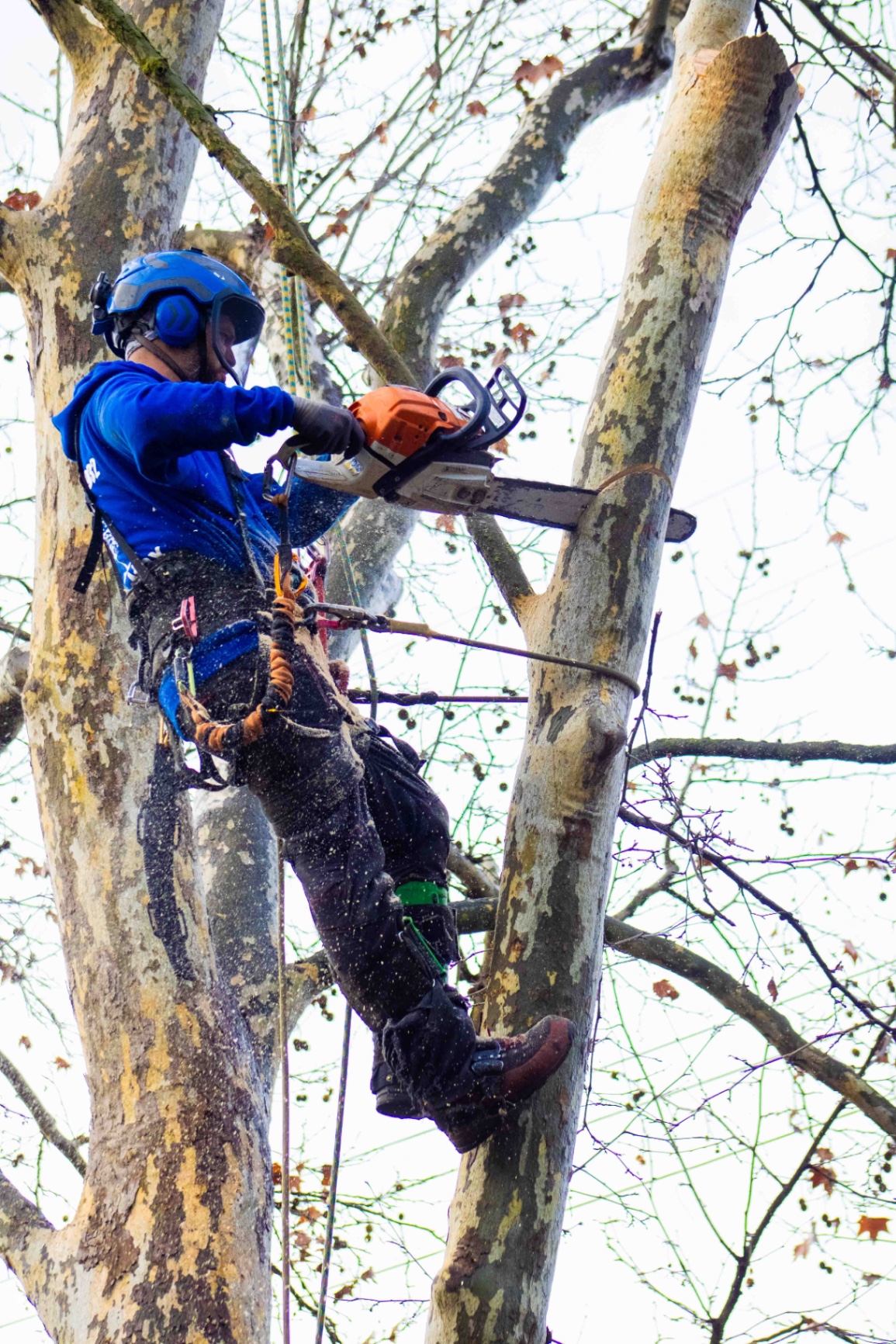
Deadwood removal — technically called "crown cleaning" in arboriculture — is one of the most beneficial and often overlooked tree maintenance practices. Our arborists begin with a full canopy assessment from the ground, then move into the tree using climbing gear or an aerial lift to access all sections of the crown.
We remove all dead, dying, diseased, and broken branches using proper cutting technique — cutting at the branch collar to preserve the tree's natural wound-closure response. Proper cut placement is critical; cutting too close or too far from the trunk impairs healing and invites decay into healthy tissue.
After deadwood removal, trees look markedly better and healthier — the canopy is cleaner and allows better light penetration for the remaining live branches. We recommend scheduling deadwood removal every one to three years depending on species, age, and site conditions. Older trees in drought-prone areas often benefit from annual attention.
Get Your Free Estimate Today
Call us or fill out the form — we respond same day.